French Bulldogs have a reputation for being stubborn, but that’s not quite the right word. They’re selective. They’ll do what you ask — once they’re convinced there’s something in it for them. The key to training a Frenchie is figuring out what they want (almost always food) and making that work for you.
Here’s what actually works, from the basics through common sticking points.
Know Your Dog’s Limits Before You Start
French Bulldogs are brachycephalic — their flat faces make breathing harder than it looks. This matters for training because they can’t sustain long sessions without getting winded or overheated, especially in warm weather.
Keep sessions to 5–10 minutes maximum. Multiple short rounds throughout the day work better than one long one. If your dog starts panting heavily, loses focus, or starts offering random behaviors hoping to stumble onto the right one, stop. They’re done for now.
The other thing to lock in early: Frenchies respond to positive reinforcement and not much else. Correction-based training tends to make them shut down or dig in. Find what genuinely excites your dog — small pieces of chicken, cheese, or real training treats, not just their regular kibble — and keep those reserved for training only. The treat needs to be worth the effort.
Potty Training
Consistency matters more than anything else here.
Step 1: Pick one spot. Choose a specific outdoor area and take your Frenchie there every single time. The familiar smell helps them understand what’s expected faster than rotating locations.
Step 2: Set a schedule. Take them out immediately after waking up, after every meal, after naps, and before bed. For puppies under 4 months, add a trip every 2 hours in between.
Step 3: Reward the moment it happens. Go outside with your dog — don’t just let them into the yard. The moment they go, mark it immediately with a “yes!” or a click, then give the treat. Timing is everything; reward within 2 seconds or the connection fades.
Step 4: Handle accidents without drama. If you catch them mid-accident, calmly interrupt and take them outside. If you find a mess after the fact, clean it up and move on. Punishing after the fact doesn’t teach them anything — it just makes them anxious around you.
Most French Bulldogs are reliably potty trained within 4–8 weeks. Stick with the schedule even when it feels like nothing is clicking. It is.
Crate Training
A crate isn’t a punishment. Done right, it becomes a place your dog genuinely wants to go — and it makes potty training dramatically easier.
Get the right size. The crate should be just big enough for your dog to stand, turn around, and lie down comfortably. Too large and they’ll potty in one corner and sleep in the other, which defeats the whole purpose.
Introduce it slowly. Leave the door open and toss treats inside to let your dog explore on their own terms. Once they’re going in voluntarily, start closing the door for 30 seconds. Then a minute. Then five. Build up in small increments — rushing this phase is the most common mistake, and it sets things back weeks.
Keep early sessions short. Go from 5 minutes to 15 to 30 to an hour over several days. Puppies under 6 months shouldn’t be crated for more than 2–3 hours at a stretch during the day, though overnight is different.
One thing that trips people up: crating a dog right after a high-energy play session. Let them settle down first so they’re already calm when they go in.
Basic Commands
These four cover most of what you’ll ever need.
Sit Hold a treat close to your dog’s nose, then slowly move your hand up. As their head follows the treat, their bottom will lower naturally. The moment they sit, say “sit,” mark it, and reward. Practice in short sets of 5–10 repetitions.
Stay Ask for a sit. Hold your open palm toward them, say “stay,” and take one step back. Return immediately and reward. Gradually increase distance and duration — but if your dog breaks the stay, you’ve gone too far too fast. Dial back and rebuild.
Come Crouch down, open your arms, and say “come” in a genuinely excited voice. When your dog reaches you, give the treat right away. Never call your dog to come and then do something they hate, like a bath or nail trim. It poisons the recall fast.
Leave it Hold a treat in your closed fist. Let your dog sniff and paw at it. The moment they back off or give up, open your hand and give the treat. Once they reliably disengage, add the verbal cue. This command pays for itself on walks within the first week.
Leash Manners
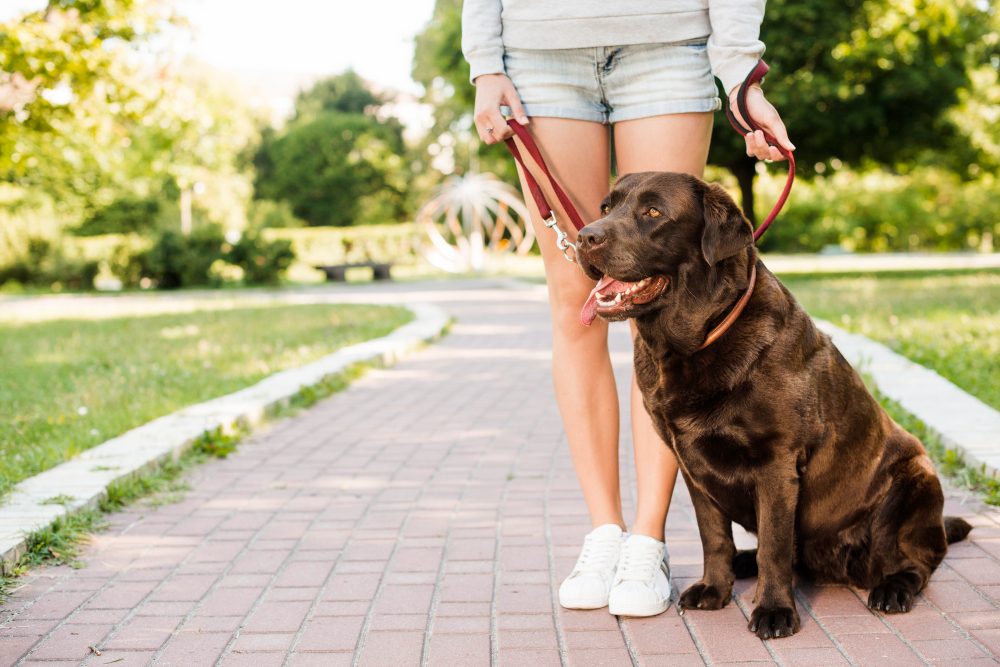
French Bulldogs aren’t strong pullers, but they do get distracted. The goal is a dog that walks beside you without constant tension on the leash.
Start in a low-distraction area. When your dog walks next to you with a loose leash, reward them. The moment they pull, stop completely — no forward movement while the leash is taut. Wait for them to release the pressure, then continue. It’s tedious at first, but dogs learn quickly that pulling literally stops the walk.
One important note: because of their flat faces, French Bulldogs do better with a harness than a collar. A collar puts pressure on the throat when they pull, which is uncomfortable and can make breathing harder. A front-clip harness gives you steering control without the pressure.
How Long Does Training Take?
Most French Bulldogs learn the basics within 4–6 weeks of consistent daily practice. The word “consistent” is doing the heavy lifting — five short sessions every day beats two long ones once a week, every time.
If you’re stuck on a specific behavior, one session with a positive-reinforcement trainer can be worth more than weeks of trial and error. French Bulldogs are easier to train than their reputation suggests. They just need someone willing to make it worth their while.