

The kitten you just brought home is a strange little creature: asleep for roughly twenty hours a day, then a blur of claws and curiosity for the four hours she’s awake. Between eight and twelve weeks she’s gaining about a pound a month — a 2-pound kitten at eight weeks, closer to 3 pounds by twelve — and everything she learns in this window quietly shapes the adult cat she becomes. Here’s how to get the first month right.
Set Up the Room Before She Arrives
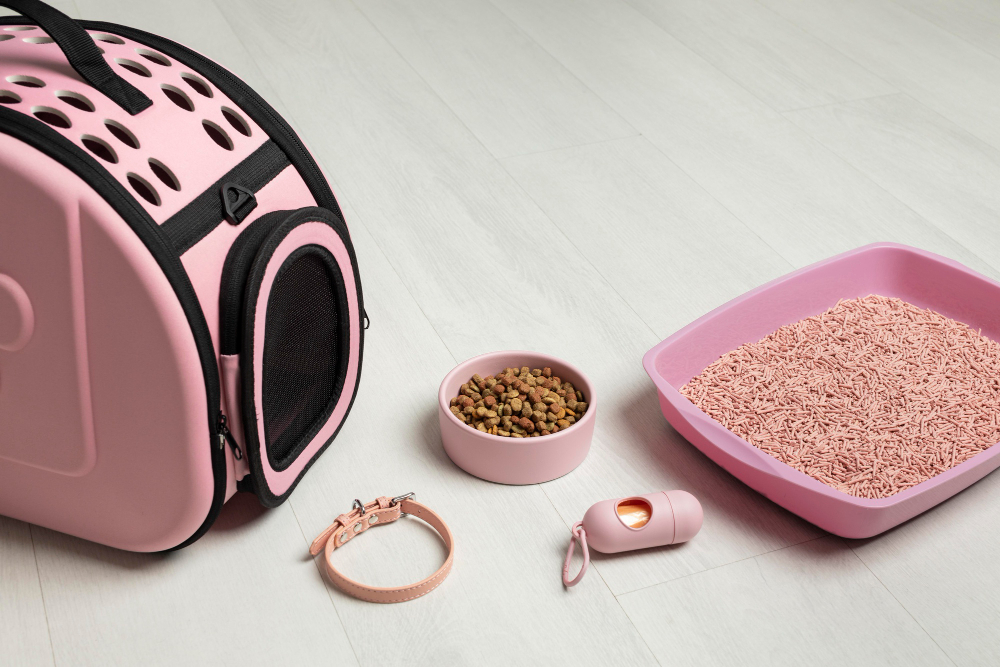
Don’t give a tiny kitten the run of the whole house on day one. Pick one quiet room — a spare bedroom or bathroom works — and make that her base camp for the first few days. In it, put a food and water bowl, a low-sided litter box she can climb into easily, a soft bed, and a hiding spot like an open cardboard box turned on its side. The hiding spot matters more than it looks: a kitten with a den to retreat to settles faster than one stranded in open space.
Then get on the floor and look at the room from her height. Tuck blind cords up out of reach — they’re a strangulation risk and an irresistible toy. Wrap or hide electrical cords. Sweep up anything small enough to swallow: hair ties, bottle caps, rubber bands, twist ties. Move breakables off low shelves, because she will climb. And check your houseplants against a toxic-plant list — common ones like lilies, jade, and dracaena can poison a curious nibbler. Lilies in particular are deadly to cats even in tiny amounts.
Feed for Growth, Not Just Hunger
A kitten this age needs food made specifically for kittens, not adult cat food. Growing kittens burn through roughly three times the energy of an adult cat and need the higher protein and fat to match. Any format works — dry, wet, or fresh — as long as the label says it’s complete and balanced for growth or for “all life stages.”
At eight to twelve weeks, feed small meals several times a day rather than one big bowl; their stomachs are tiny and their fuel tank empties fast. Many owners simply leave dry kitten food available and add a couple of wet meals. Keep fresh water out at all times in a separate bowl, set a few feet away from the food (cats instinctively dislike drinking right next to where they eat), and wash both bowls daily.
Litter Training Mostly Trains Itself
Here’s the good news: kittens are close to self-litter-training. The instinct to dig and bury is built in. Your job is mostly logistics. Use a box with low sides she can step into without a struggle, fill it with an unscented litter, and place it somewhere quiet but easy to reach — not next to her food, and not behind a door that might swing shut.
After meals and after naps are the high-probability moments. If she starts sniffing and circling, gently set her in the box. Scoop waste out daily and do a full litter change and box wash weekly. If a kitten suddenly avoids a clean box or strains without producing, that’s a vet call, not a training problem.
Channel the Energy You Can’t Avoid
A kitten left to entertain herself will entertain herself by shredding your curtains and ambushing your ankles. The fix isn’t to stop the behavior — it’s to give it a target. Run a wand toy with a feather or string until she’s actually winded; ten focused minutes twice a day burns the manic energy that otherwise goes into your houseplants. Rotate a small handful of toys so they stay novel, and give her something vertical to climb, even a sturdy cat tree or a couple of stacked boxes.
Set the rules now, gently. When teeth or claws find your hand, don’t yelp and wrestle — that reads as play. Freeze, then redirect her onto a toy. Never swat or scold; a kitten that learns hands are scary becomes a skittish adult. Reward the behavior you want with a tiny kitten treat and she learns fast.
This is also the prime socialization window. Calmly expose her to ordinary household life — the vacuum from across the room, the doorbell, gentle handling of her paws and ears, visits from a friend. A kitten who meets the world as routine at ten weeks grows into a cat who isn’t rattled by it.
Daily Grooming and the First Vet Visit
Start grooming habits before she needs them. A quick daily brush keeps loose hair down and, for long-haired kittens, prevents mats before they form. Touch her paws often and introduce nail trimming in tiny sessions so it’s no big deal later. If you start brushing her teeth now with a kitten toothbrush and cat-safe toothpaste, you’re heading off dental disease that catches most cats by middle age.
Book a wellness exam early. The first month is when the medical groundwork gets laid: a kitten vaccine series, deworming and parasite prevention, microchipping, and a conversation about spaying or neutering down the line. Your vet will weigh her, check that she’s growing on track, and flag anything you can’t see.
The first month feels like a lot because it is. But a kitten given a safe room, the right food on a steady rhythm, an outlet for her energy, and calm early handling does most of the growing-up work herself — and turns into the confident, easygoing cat you were hoping for.