
If your dog yelps, paws at the face, or suddenly comes back from the yard with a swollen muzzle, a bee sting is a common reason. Most dogs have a painful but limited reaction that settles with simple home care. A smaller number develop rapid swelling, vomiting, or breathing trouble and need veterinary help fast. The safest approach is to assess the sting promptly, then decide whether it looks mild or is starting to move toward an emergency.
What a bee sting usually looks like in dogs
A typical sting causes sudden pain, redness, and localized swelling. Dogs are often stung on the nose, lips, face, or paws because they investigate bugs with their mouth and feet. Some dogs lick, rub, whine, or limp for a while but otherwise act normal.
Not every stinging insect behaves the same way. A honeybee can leave a barbed stinger behind. Wasps, hornets, and yellow jackets usually do not, and they may sting more than once. That distinction matters because a visible honeybee stinger should be removed promptly, while multiple stings raise the risk of a stronger whole-body reaction.
What to do right away
The first job is to get your dog away from the insect or nest. If your dog disturbed a hive or is being swarmed, focus on getting distance immediately and head to a veterinarian rather than trying to treat each sting yourself.
If the sting appears to be a single sting on the skin, look closely for a stinger. When one is visible, try to scrape it out with a flat object such as a credit card, fingernail, or another blunt edge. Avoid pinching the stinger or venom sac if you can. Squeezing with tweezers can push more venom into the tissue.
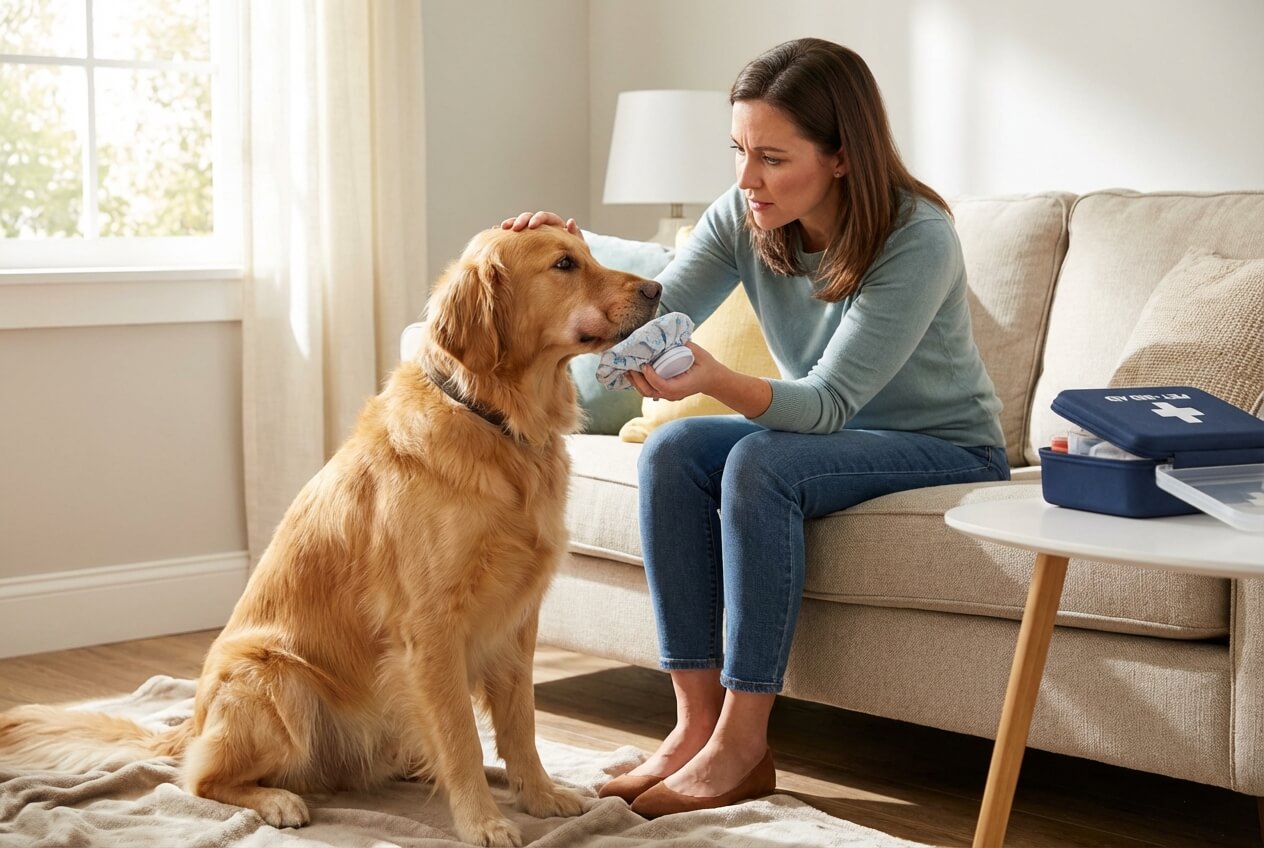
Once the area is clear, a cool compress is usually the most useful first-aid step. Wrap an ice pack or cold pack in a thin towel and hold it against the area for about 5 to 10 minutes at a time. This can help with both pain and swelling. If the skin is dirty, you can gently rinse or wash the area with mild soap and water first, but do not scrub an already tender sting site.
Fresh water is fine to offer, especially if your dog has been upset or panting, but water does not neutralize venom. The real goal is comfort, observation, and knowing when to escalate.
When a bee sting becomes urgent
A bee sting should be treated as urgent if it involves the mouth, tongue, throat, or heavy swelling around the face and neck. Even when the sting itself is small, swelling in these areas can interfere with breathing or swallowing.
You should also seek veterinary care immediately if your dog develops:
- trouble breathing, noisy breathing, or repeated coughing
- sudden facial swelling or widespread hives
- repeated vomiting or diarrhea
- weakness, wobbliness, pale gums, or collapse
- severe pain that does not settle
- multiple stings from disturbing a hive or nest
These signs can point to an allergic reaction or anaphylaxis, which can become life-threatening quickly. In dogs, major allergic reactions may show up as vomiting, diarrhea, lethargy, shock, or breathing changes, not just skin swelling. If you see those signs, do not wait to see whether they pass.
Should you give Benadryl or another antihistamine?
Many owners have heard that diphenhydramine can help after a sting. Sometimes it can, but it should not be your first move without veterinary guidance. The correct dose depends on your dog’s weight, health status, and the exact product in your house, because some combination allergy medicines contain ingredients that are not appropriate for dogs.
Call your veterinarian or an emergency clinic before giving any antihistamine. That is especially important for puppies, senior dogs, pregnant dogs, dogs with heart disease, glaucoma, high blood pressure, or dogs already taking other medications.
Do not give your dog human pain relievers unless a veterinarian specifically tells you to. Medications people commonly keep at home can be dangerous for dogs and may create a second problem on top of the sting.
What to watch for over the next several hours
Most mild bee stings stay local. The area may remain sore, red, or slightly puffy for several hours, and many dogs are back to normal by the same day or the next. Even so, it is smart to keep your dog nearby and check them often for the rest of the day.
Watch for swelling that keeps spreading, new vomiting, diarrhea, hives, restlessness, or unusual tiredness. A dog that was only pawing at the muzzle at first but later seems weak or starts breathing harder should be seen right away.
If the sting is on a paw, your dog may limp for a bit. If it is on the face, expect more visible swelling than you might see elsewhere. Face stings often look dramatic, but the key question is whether the swelling is stable and your dog is still breathing and swallowing normally.
When a vet visit is the safer choice even if your dog seems stable
Not every sting is an emergency, but some situations deserve same-day veterinary advice even when your dog seems fairly comfortable. That includes dogs with a known history of allergic reactions, very young or very old dogs, dogs with significant medical conditions, and dogs that may have been stung more than once.
Veterinary care may include monitoring, prescription antihistamines, pain control, fluids, oxygen support, or emergency treatment for anaphylaxis. The earlier a serious reaction is treated, the safer it usually is.
What not to do
Owners often lose time on remedies that feel active but are not very useful. Try not to:
- squeeze at a visible stinger
- apply ice directly to the skin
- force food, water, or supplements
- give over-the-counter human medications without veterinary approval
- assume a sting inside the mouth is minor because the outside of the face looks normal
- keep watching at home if your dog has multiple stings or systemic signs
A calm, simple response is usually best: remove the stinger if present, cool the area, call your vet about medication, and watch closely for changes.
How to lower the odds of another sting
You cannot remove every bee or wasp from your dog’s world, but you can make stings less likely.
Keep dogs away from visible nests, avoid letting them snap at flying insects, and check yards or patios for ground nests before off-leash play. Dogs that have had a previous allergic reaction should have a clear plan with their veterinarian before the next outdoor season.
A single bee sting is often manageable, but it is never something to shrug off completely. Fast assessment matters. If your dog has only mild local swelling and stays otherwise bright, a cool compress and close monitoring may be enough. If breathing problems, vomiting, collapse, facial swelling, or a sting inside the mouth enters the picture, skip home treatment and get veterinary help immediately.