Cats with hyperthyroidism often need a more careful feeding plan than a healthy adult cat. The hard part is that there is no simple list of “bad foods” that fits every cat. A cat’s best diet depends on the treatment plan, thyroid numbers, kidney health, appetite, weight, and whether the veterinarian is using food as part of the treatment.
That means the most important rule is not to experiment. If your cat has been diagnosed with hyperthyroidism, food changes should be coordinated with your veterinarian, especially if your cat is losing weight, vomiting, drinking more, acting restless, or already taking thyroid medication.
Still, there are clear mistakes to avoid. Some foods can interfere with a low-iodine treatment plan. Some can make it harder to keep weight stable. Others add risk without offering real benefit. Here is how to think about what not to feed a cat with hyperthyroidism.
Do not mix other foods into a low-iodine prescription diet
Some hyperthyroid cats are managed with a therapeutic iodine-restricted diet, such as a veterinary prescription thyroid diet. The idea is straightforward: iodine is needed to make thyroid hormones, so a diet that tightly restricts iodine can help reduce excess thyroid hormone production in some cats.
But this approach only works when the cat eats that diet exclusively. If your veterinarian prescribes a low-iodine thyroid diet, do not mix in regular canned food, dry food, treats, table scraps, broth, fish flakes, pill pockets, or another pet’s food unless your vet says it is allowed.
Even small extras can undermine the diet because they may add iodine back into the cat’s daily intake. This is one reason low-iodine diet therapy can be difficult in multi-cat homes, homes with outdoor cats, or households where a cat is used to grazing from several bowls.
If your cat refuses the prescription food, tell your veterinarian instead of trying to “make it work” by mixing it with other foods. The mixed diet may no longer function as treatment, and your cat may still be under-managed.
Do not use a thyroid diet without a diagnosis and monitoring
A cat should not be placed on a thyroid-management diet just because they are older, thin, hungry all the time, or acting unusually active. Those signs can point toward hyperthyroidism, but they can also overlap with diabetes, kidney disease, intestinal disease, dental pain, cancer, and other problems.
Hyperthyroidism is diagnosed with veterinary testing, usually including a physical exam and bloodwork to measure thyroid hormone levels. After treatment begins, monitoring matters because thyroid control can affect the kidneys, heart, weight, and blood pressure.
Using a restricted diet without testing may delay the real diagnosis. It can also make it harder for your vet to interpret what is going on if your cat’s signs continue.
Do not keep feeding unlimited treats
Treats are easy to overlook. A few bites here and there may seem harmless, but for a hyperthyroid cat, treats can cause two problems.
First, if the cat is on a low-iodine diet, treats may interfere with the diet’s purpose. Second, if the cat is not on a low-iodine diet, too many treats can crowd out the complete food your cat needs while their body is already under metabolic stress.
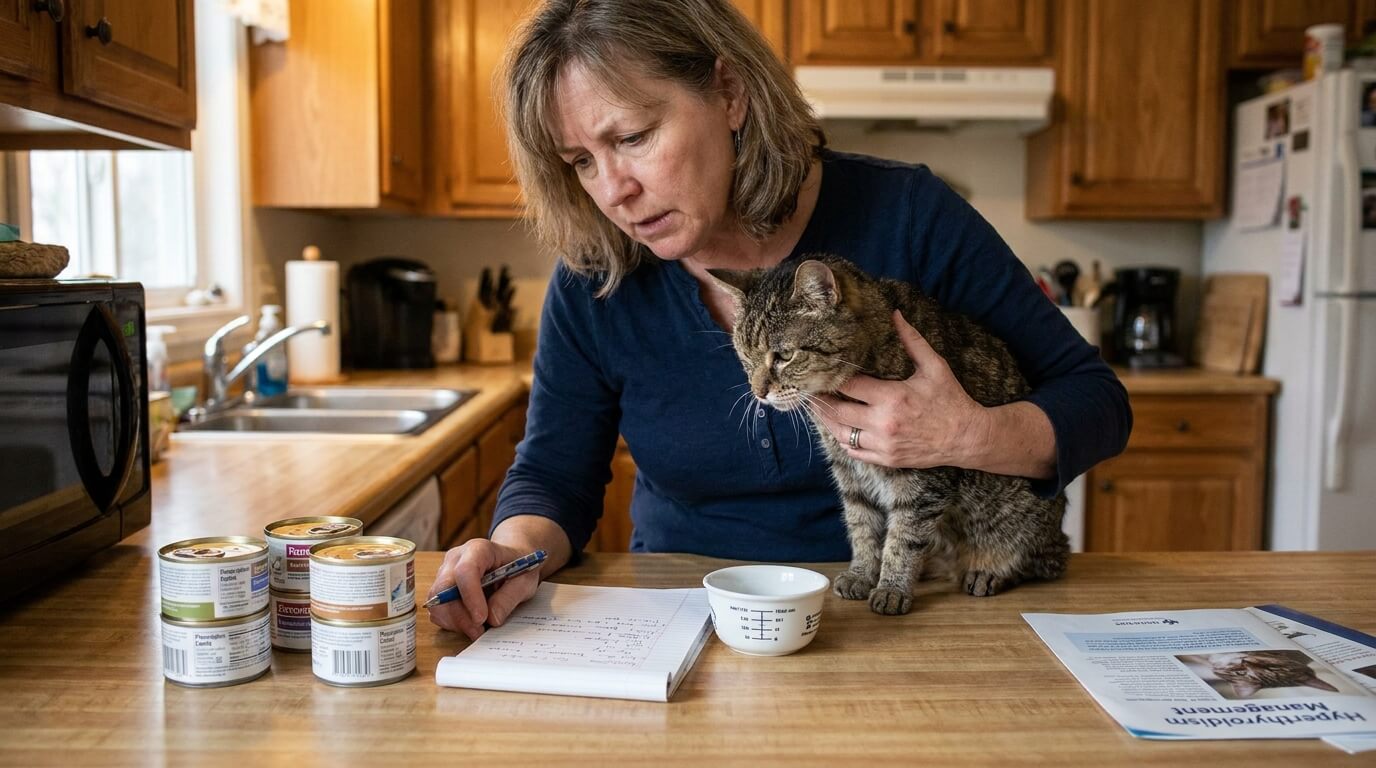
Hyperthyroid cats often lose weight even when they seem hungry. They need steady, complete nutrition, not a diet built around snacks. Ask your veterinarian which treats, if any, fit your cat’s plan. If treats are allowed, keep them measured and consistent so changes in appetite and weight are easier to track.
Do not rely on fish, seafood, or seaweed-based extras without asking your vet
Many cats love fish-flavored foods. The issue is not that every fish food is automatically dangerous. The issue is that seafood and seaweed-based ingredients may contain iodine, and iodine matters in thyroid disease management.
If your cat is being treated with a strict iodine-restricted diet, fish treats, tuna water, dried bonito flakes, seaweed supplements, kelp powders, and seafood toppers are usually the kind of extras that can defeat the plan. If your cat is being treated with medication, radioiodine, or surgery instead, your veterinarian may still want a consistent diet so weight, appetite, and lab results are easier to interpret.
Do not guess. Bring the food label or supplement bottle to your vet and ask whether it fits your cat’s treatment.
Do not add supplements marketed for thyroid support on your own
“Thyroid support” products can sound gentle because they are sold as supplements. That does not make them appropriate for a hyperthyroid cat. Some may contain iodine, glandular ingredients, herbs, or nutrients that are not right for your cat’s condition or medication.
Hyperthyroidism is a medical disease involving excess thyroid hormone. It is not something to balance casually with an over-the-counter supplement. If a product claims to support thyroid function, boost metabolism, detox the thyroid, or naturally correct hormone levels, talk to your veterinarian before using it.
This is especially important if your cat takes methimazole, has kidney disease, has heart changes, or is being evaluated for radioiodine treatment.
Do not feed raw glandular meats or unknown organ blends
Raw and homemade diets require careful formulation even for healthy cats. For a cat with a thyroid disorder, they need extra caution. Avoid raw glandular tissues, neck mixes, or vague organ blends unless a veterinary nutritionist has specifically built the recipe for your cat.
The concern is consistency and control. With hyperthyroidism, you want your cat’s intake to be predictable. Diets with uncertain iodine content, inconsistent nutrient balance, or organ ingredients that are not clearly labeled make that harder.
If you want to feed homemade food, ask your veterinarian for a referral to a board-certified veterinary nutritionist. A recipe found online is not enough for a cat with an endocrine disease.
Do not ignore calories because the cat is hungry
Many hyperthyroid cats act ravenous. They may beg, steal food, wake you for meals, or seem as if they cannot get full. It is tempting to keep feeding more, especially if the cat is losing weight.
Your cat may truly need nutritional support, but constant extra feeding is not a substitute for controlling the thyroid disease. A cat who is eating well but still losing weight needs veterinary follow-up. The goal is not only to add calories; it is to treat the condition driving the weight loss.
Ask your vet how often to weigh your cat at home, what weight change should trigger a call, and whether your cat needs a calorie-dense food, a different treatment plan, or bloodwork recheck.
Do not forget other health conditions
Many cats with hyperthyroidism are seniors. They may also have kidney disease, high blood pressure, heart changes, arthritis, dental disease, or digestive problems. A food that seems reasonable for thyroid management may not be ideal for the whole cat.
For example, one cat may need a strict low-iodine prescription diet. Another may need thyroid medication plus a food that supports kidney health. Another may need help maintaining muscle because they have lost weight for months.
This is why “what not to feed” depends on the treatment plan. The wrong food is not always a single ingredient. Sometimes it is any diet that ignores the cat’s full medical picture.
A safer feeding checklist
If your cat has hyperthyroidism, use this checklist before changing food:
- Has your cat had recent thyroid bloodwork?
- Is the cat on methimazole, a thyroid diet, radioiodine planning, or another treatment?
- Did your vet say the food must be exclusive?
- Are treats, toppers, pill pockets, or flavored medications allowed?
- Is your cat still losing weight despite eating?
- Does your cat also have kidney, heart, or blood pressure concerns?
- Do you know when the next recheck is due?
If you cannot answer these questions, pause before changing the diet.
The bottom line
For cats with hyperthyroidism, the biggest feeding mistake is inconsistency. Do not mix regular food into a low-iodine prescription diet. Do not add seafood toppers, seaweed, treats, supplements, or homemade extras without checking first. Do not use diet as a replacement for diagnosis, monitoring, or treatment.
A good feeding plan should match the cat in front of you: their thyroid level, weight, appetite, kidneys, heart, and treatment option. If your cat is newly diagnosed or not doing well, ask your veterinarian exactly what foods are allowed, what should be avoided, and how strictly the plan needs to be followed.
With hyperthyroidism, food can matter a lot. But it works best when it is part of a clear veterinary plan, not a guessing game.