
What Is a Raas Cat?
The Raas cat is a rare Indonesian cat associated most closely with Raas Island and the nearby Madura region. You may also see the breed called the Madurese cat, Busok-Raas, Busok cat, or Amethyst cat, depending on coat color and local naming traditions. It is not a breed most cat lovers will encounter at a shelter or from a typical breeder, which is part of why it feels so mysterious.
At its heart, the Raas is a naturally developed island cat rather than a long-established show breed with decades of international registry history behind it. Some details are fairly consistent, such as its Indonesian origin, rarity, athletic body, and short coat. Other details, including exact temperament patterns and long-term health trends, should be treated with care because there are not large public populations to study.
Origin and Background
Raas cats are native to Indonesia, with their story centered on Raas Island, east of Madura. Isolated island populations can develop a distinctive look over many generations, especially when cats breed within a limited local population. The Raas is often described as a natural landrace that later attracted attention from cat enthusiasts and local preservation efforts.
The breed carries cultural importance in its home region. Traditional stories describe these cats as special animals that were not casually owned or freely traded. Modern accounts also emphasize preservation, because genuinely representative Raas cats are considered uncommon. For that reason, anyone outside Indonesia who sees a cat advertised as a Raas should ask careful questions about documentation, breeding practices, and welfare.
Appearance
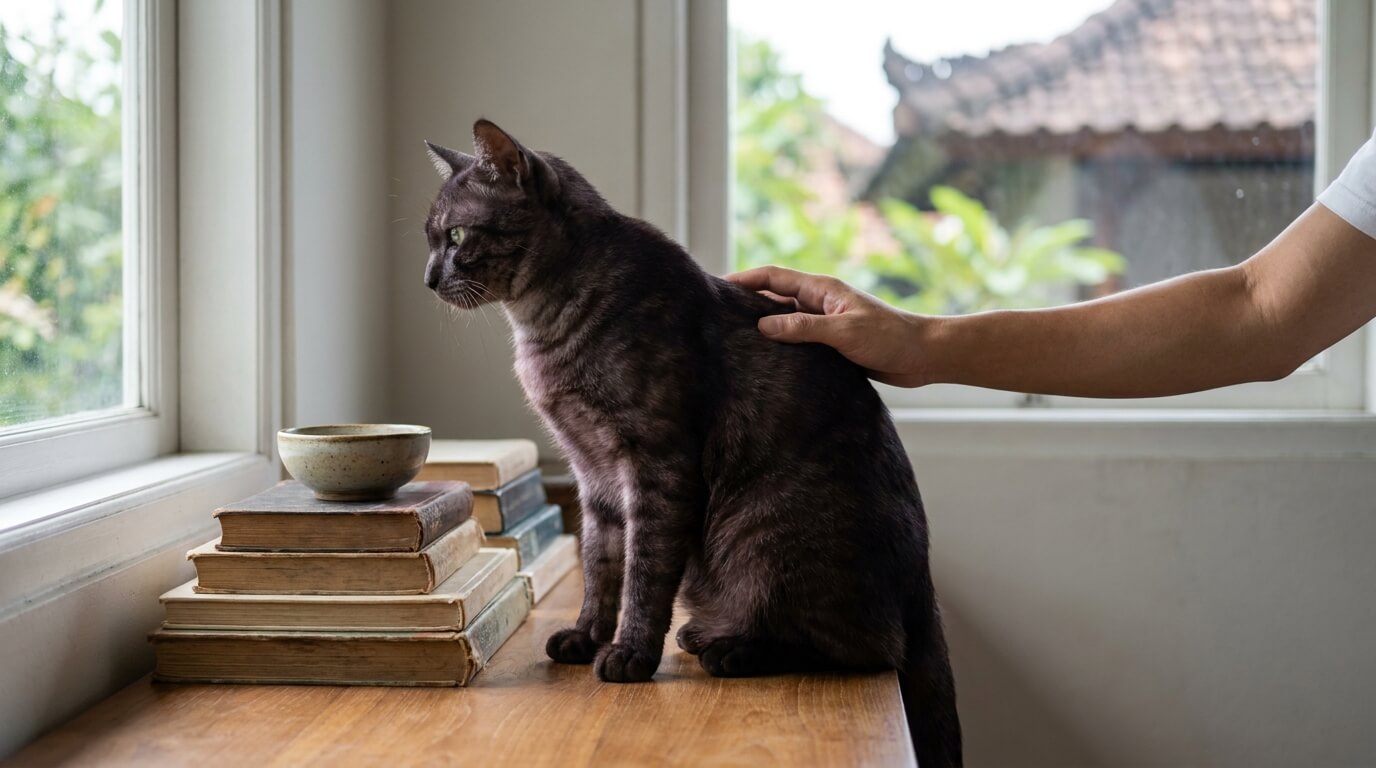
Raas cats are usually described as medium-sized, firm, and muscular, with a balanced athletic build rather than a soft, round body type. Their heads are often noted for a triangular or wedge-like shape, with alert ears and expressive eyes. The coat is short to medium in length, smooth, and close-lying, which gives the cat a clean, glossy look when healthy.
The best-known color is a blue-gray coat, often associated with the name Busok. Chocolate-toned cats may be referred to as Amethyst, and some sources also describe black and lilac variations. Because the breed is rare and still developing in formal cat fancy circles, coat descriptions can vary. A gray coat alone does not prove a cat is a Raas; many domestic cats and several established breeds can share similar coloring.
One feature sometimes mentioned in breed descriptions is a naturally shortened or kinked tail. Tail shape can also vary in ordinary domestic cats, so it should be viewed as one clue rather than proof of breed identity.
Personality and Temperament
The Raas cat is often described as alert, active, and somewhat reserved, especially around strangers. That fits a cat with a background tied to a naturally developed island population rather than a breed selected mainly for lap-cat behavior. However, temperament is always individual. Early socialization, daily handling, environment, health, and stress levels all influence confidence.
A well-adjusted Raas may bond strongly with familiar people while remaining watchful in new situations. These cats are better understood as intelligent, athletic companions that need space to move, places to climb, and predictable routines. A shy or cautious cat should never be forced into contact. Slow introductions, quiet rooms, and reward-based interaction are safer than trying to rush trust.
Daily Care
Care for a Raas cat starts with the same basics that keep any domestic cat healthy: age-appropriate food, clean water, a safe indoor environment, routine veterinary care, and enough enrichment to prevent boredom. Because the breed is active, owners should plan for daily play rather than assuming the cat will entertain itself.
Interactive wand toys, puzzle feeders, climbing trees, window perches, scratching posts, and short training sessions can all help. A cat that gets enough activity is less likely to redirect energy into furniture scratching, nighttime disruption, or rough play. Rotate toys occasionally, since novelty often matters more than quantity.
Indoor living is usually the safer option, especially for a rare cat or any cat in an unfamiliar environment. If outdoor access is important, consider a secure catio, leash training with proper equipment, or supervised time in an enclosed area.
Grooming
The Raas cat’s short, smooth coat should be relatively easy to maintain. A weekly brushing session can remove loose hair, reduce hairballs, and give you a chance to check for skin changes, fleas, ticks, mats, or sore spots.
Basic grooming also includes nail trims, dental care, and ear checks. Do not dig into the ear canal or use harsh products without veterinary guidance. If you notice odor, discharge, head shaking, swelling, bald patches, or persistent scratching, schedule a veterinary exam rather than treating the problem at home.
Health Considerations
There is limited public health data for Raas cats, so it would be irresponsible to claim that the breed has no inherited health concerns. A small or rare breeding population can carry hidden genetic risks, even when the cats appear vigorous. Responsible breeders should be willing to discuss lineage, veterinary care, kitten socialization, and how they avoid close inbreeding.
For owners, the practical approach is straightforward: keep routine vet appointments, stay current on vaccines and parasite prevention as recommended for your region, feed a balanced diet, and monitor changes in appetite, litter box habits, breathing, weight, coat quality, mobility, and behavior. Contact a veterinarian promptly for severe, persistent, unclear, or worsening symptoms.
Finding a Raas Cat
Because Raas cats are rare, most people should not expect to find one easily. Be skeptical of sellers who use the name casually, cannot explain the cat’s background, or focus only on unusual color. Ethical sourcing is especially important when a breed is tied to conservation and a limited regional population.
If your main goal is a loving, active, short-haired companion, a local domestic shorthair may meet that need without the uncertainty. If you are specifically interested in the Raas for cultural, preservation, or breed-history reasons, take your time, ask for documentation, and prioritize welfare over novelty.